
Editor’s pick — Accessory quick take: key highlight (movement/specs for watches, materials/finish, limited run, pricing tier) in 1–2 lines.

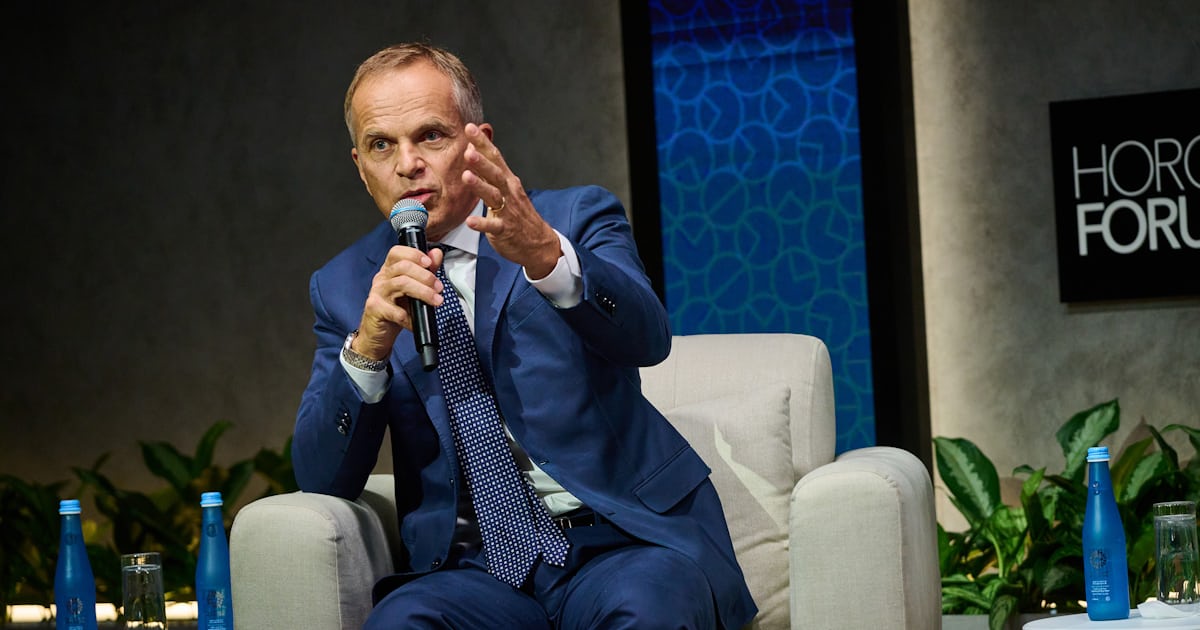
In a rare public speaking engagement, serving as the keynote address at Dubai Watch Week, Jean-Frédéric Dufour said the biggest Swiss brand by sales will continue to sell the majority of its watches through its authorized dealer network and won’t favor the Bucherer and Tourneau retail stores it acquired in 2023. Dufour said Rolex bought Swiss-based Bucherer because of a unique opportunity. “It’s a very small part of our distribution network, we don’t have any intention to expand further than that,” Dufour said of Bucherer and Rolex’s retail ambitions. He said the brand will continue to rely on its retail network of authorized retailers, including Seddiqi Holding, the Dubai watch retail juggernaut, organizer and host of Dubai Watch Week, and a major Rolex retailer. “It’s a kind of magic recipe and it is the way the industry works for a long time,” Dufour said.
The Rolex CEO called on the watch industry to celebrate and promote the labour, craft, design, and engineering prowess of the watchmaking sector to ensure it attracts top talent for years to come. Dufour went on to warn watch brands to develop deep, long-lasting relationships with clients, or risk mirroring the fate of the auto industry that he says has lost touch with its once loyal and devoted core customers. He also said apprenticeships and training are key to passing on know-how to the next era and that Rolex alone currently has some 500 apprentices across 26 different areas of expertise.

“An industry without newcomers is a little bit of a dying industry,” Dufour said, acknowledging the fresh generation of watchmakers and independent brands that have helped spark a revival in mechanical timepieces. Dufour delivered the remarks as he shared the stage with Abdul Hamied Seddiqi, the chairman of Seddiqi Holding.
“They are pushing us,” Dufour said of the new wave of independent brands and watchmakers. “They are challenging the institutional brands.”

But the Rolex CEO also issued a stern wake-up call for the watchmaking sector. He said brands must nurture profound, long-term relationships with the next generation of clients needed to grow the appreciation for mechanical watches and the horological industry, a key pillar of the Swiss economy. He pointed to automakers and brands that have shed once die-hard brand loyal clients, as cars become increasingly electronic and digital while losing appeal as expressions of individuality and personality.
At the same time, the experience of buying a new vehicle gets ever more impersonal and cold in a digital world. Mechanical watches must not lose their appeal as aspirational objects that represent ideas, including freedom, innovation, and craftsmanship, the way some auto brands once did, Dufour said. Gatherings such as Watches and Wonders in Geneva or Dubai Watch Week keep those ideas and the products they represent in young consumers’ minds.

“If you look at what we compare ourselves to – the automotive industry – look at what the car manufacturers did. There are no more car shows in the world. So they lost the connection with the final consumers. And by doing so, people don’t really care nowadays when they buy a car. It’s like a tool to move from A to B.”
Dufour said the industry needs to foster passion and emotion around watches in the way that cars once did. The Rolex CEO recalled the excitement around getting his driver’s licence, which represented a newfound freedom for a young man.
“But I don’t think it’s freedom anymore nowadays. And I think that with watchers, with the whole world that we’ve built around the watch industry, it means a lot of freedom for these kids,” he said.

Swiss private business leaders meeting with U.S. President amid tariff trade talks between governments.
The comments underscore the Rolex Chief Executive’s standing and increasing influence across the industry, which has suffered this year amid rising gold prices, a strong Swiss franc, and U.S. tariffs on Swiss goods, including watches. Dufour was among a group of Swiss business executives who travelled to Washington, D.C. for a White House meeting earlier this month in an effort to repair strained trade relations. Just days later, the Trump administration said it had struck a deal with the Swiss government to reduce tariffs on Swiss imports to 15% from 39% in exchange for increased U.S. investment by some Swiss companies in the pharmaceutical and gold refining sectors. The new tariff deal, however, hasn’t yet been finalized or brought into effect.
On the sidelines of Dubai Watch Week and following his keynote address, Dufour said the White House visit was needed to address the economic suffering in Switzerland, particularly the watch industry.
“We had to do it,” Dufour said. The tariffs were having a major impact on the watch industry, and after the shock 39% tariffs were imposed, “people were frozen,” in the watch industry, Dufour said in brief comments to Hodinkee.

During his keynote discussion, moderated by Revolution Magazine founder Wei Koh, Dufour also gave a rare glimpse behind Rolex’s spending and budgeting to upkeep its industrial manufacturing operations, saying the company invests about CHF 100 million per year upgrading, repairing, and replacing its fleet of high-tech machines that allow it to produce about 1 million watches per year.
“It’s not just because we find it fun. It’s because we want to always have the latest generation to be able to produce the best components we can in terms of precision and quality,” he said. The Rolex boss also revealed that Rolex uses Artificial Intelligence to aid in programming and running machines, as well as to enhance quality control testing and make it more efficient.
“AI can also help you for the final quality test. Because you can replace the human eyes by AI, and instead of controlling maybe just the samples of what you do, you can control 100%,” he said. But he also emphasized that humans are still needed to perform a myriad of tasks to produce a watch, from assembling movements and casing watches, to design. Owned by a single shareholder, the Hans Wilsdorf Foundation, Rolex has more than 15,500 employees worldwide, with about 80% of its staff in Switzerland.
“They are watchmakers. They can’t do everything by robots,” he said.

Wrist shot of Rolex CEO Jean-Frédéric Dufour, wearing the new Rolex Land-Dweller.
Dufour also discussed the Rolex Certified Pre-Owned program that has become a significant line of business for the brand’s Authorized Dealer network, including the Seddiqi’s in Dubai. Buying, certifying, servicing, and selling used Rolex watches was “the last stone of what we wanted to offer the customer,” he said. Selling brand-certified re-owned watches is a way to bring in new, younger customers and develop those deep, long-lasting relationships that Dufour said are key to the industry’s staying power.
The program allows the brand to tell customers, “We will always take care of you, in a way. It’s a very long-term commitment, and it’s also something which really brings trust,” Dufour said.
Source: www.hodinkee.com — original article published 2025-11-20 11:20:00.
Read the full story on www.hodinkee.com → [source_url]