Editor’s pick — Accessory quick take: key highlight (movement/specs for watches, materials/finish, limited run, pricing tier) in 1–2 lines.

Dubai leaped to the center of the watch world this month as the top names in the industry converged on the rapidly growing city in the United Arab Emirates for the 10th edition of Dubai Watch Week. Hosted and organized by Ahmed Seddiqi and marking the retailer’s 75th anniversary, the show, which welcomed a true ‘who’s who’ of watch industry executives, included more than 90 brands and attracted more than 49,000 visitors, a 113% increase over the previous edition in 2023.
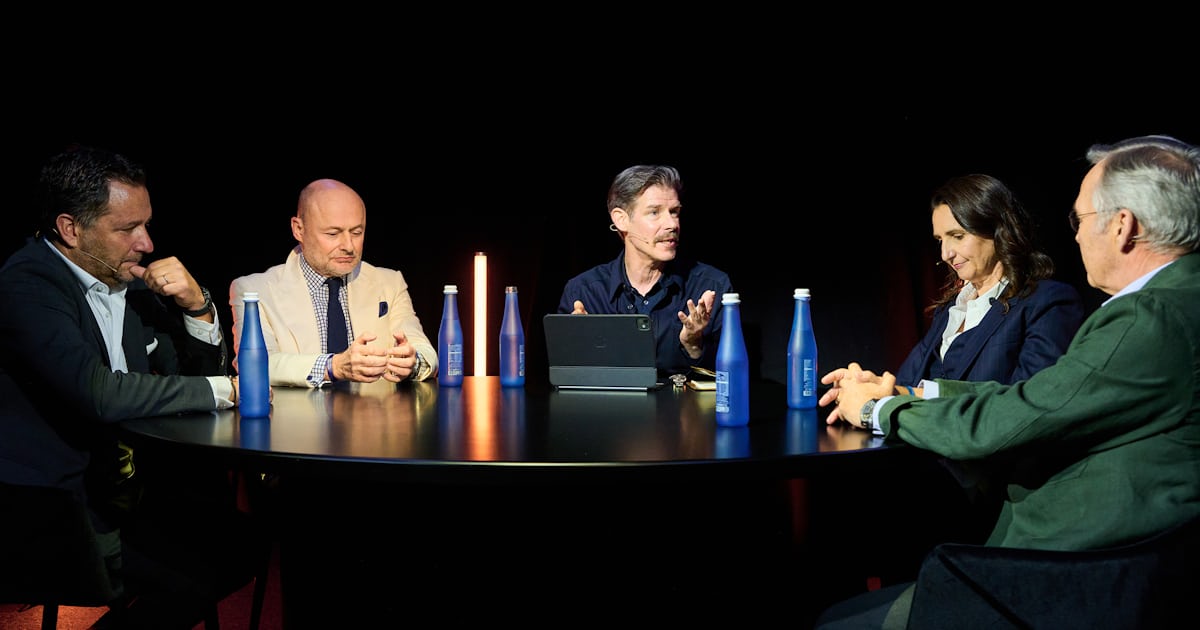
There were plenty of firsts in this Dubai Watch Week, including a keynote address from Rolex Chief Executive Jean-Frédéric Dufour, with notable comments that we covered here. Another first was the CEO Roundtable Horology Edition featuring an intimate and candid discussion with the leaders of four of the industry’s most important brands, Audemars Piguet, Breitling, Chopard, and Hublot. I was honored to be asked to moderate and ask questions for the panel, and you can watch the full video from the Dubai Watch Week YouTube channel below.
One of the more critical elements of the talk is raised by Audemars Piguet Chief Executive Officer, Ilaria Resta. While brands are dealing with an industry-wide downturn following the post-pandemic boom, makers and suppliers to the Swiss watch industry are suffering more acute economic pain from the slowdown in demand for luxury timepieces. With the prospects of a recovery on the horizon, the executives warn that the industry needs to better align its production needs, orders, and interaction with its suppliers. If they don’t, they risk repeating the ‘boom and bust’ cycle again, which could diminish Switzerland’s specialized manufacturing prowess in watchmaking.
Resta, the CEO of family-controlled Audemars Piguet, says suppliers and components makers have been swept up in the “perfect storm” of challenges facing the sector – from the strong Swiss franc, to soaring gold prices, to a dip in consumer demand, and, most certainly, U.S. tariffs. If manufacturers don’t better cater to the needs of these critical suppliers, the entire industry will be dragged down.

From left, Julien Tornare, Georges Kern, Andy Hoffman, Ilaria Resta, Karl-Friedrich Scheufele.
“Very soon this decline will be over, and hopefully we will be growing again, and I wish that we all remember the muscle memory of what has happened in these years as an industry. Because in reality,; there are people who are not at this table who are our suppliers. They have been living a different story than ours,” Resta says during the CEO Roundtable discussion at Dubai Watch Week.
“What we have seen has been massively amplified for them. They have just seen the orders going up and then the orders going down from one day to another. We will navigate out of this crisis, we are quite confident. But if we do not go back to responsible growth and we do not align our ecosystem and our supply chain truly end-to-end with our suppliers, then I think we will see this coming back again,” she says.


Audemars Piguet, which towered over the Dubai Watch Week landscape with the largest and most visited single-brand exhibition that featured both the latest offerings and a comprehensive selection of important vintage pieces, has already taken action on this front. It bought a majority stake in Inhotec SA, a key Swiss supplier involved in high-precision machining and micro-mechanics, this summer. The deal sees AP provide financial and strategic support to Inhotec, as the component maker continues to supply other brands.
“If there are casualties on their side, then there are casualties for the industry. This is the key thing to watch out for. We are talking about brands, but we are not talking about the broader ecosystem,” Resta says.

Photo courtesy Chopard.
Karl-Friedrich Scheufele, the co-president of Chopard and the head of the family-controlled brand’s watchmaking division, says his company has seen firsthand the pressures on component makers through its dial maker Metalem SA in Le Locle, Switzerland.

“We know what they are going through right now. The ups and downs. Even though we [Chopard] are a manufacture with high vertical integration, we are still dependent on suppliers,” Scheufele says. The veteran executive presided over the high-profile launch of the new L.U.C Grand Strike featuring a grande sonnerie, petite sonnerie, minute repeater, and a 60-second tourbillon with stop seconds, during the week that was one of the most discussed, admired, and praised timepieces of the show. ” If that supply chain breaks because these suppliers can no longer get back up on their feet or if they disappear, the entire industry is at stake,” he says.
The Dubai Watch Week CEO Roundtable marked one of the first times a group of top executives had gathered together for an intimate, frank, and public discussion on the state of the horology sector. The talk came just days after the Swiss government and its U.S. counterparts announced an agreement to reduce tariffs on Swiss goods imported into the U.S. to 15% from 39%, bringing much-needed relief to Swiss watchmakers that had suffered under the shift in U.S. trade policy. AP’s Resta called the proposed deal a return to “some sanity” for the industry with “more manageable” tariff levels, but also said she expects the elevated level of uncertainty (that has disrupted watchmaking over the past two years) to continue. Chopard’s Scheufele says the industry, which has survived plenty of previous challenges, is now, at least, looking at a “half-full” glass with more certainty around the critical U.S. market.

Breitling Chief Executive, Georges Kern, who is preparing to launch two more brands in the next year–high-end Universal Geneve and approachably-priced Gallet– under what will be known as the ‘House of Brands,’ says these are the most complicated times for the watch industry that he’s seen over his three-decade career. Still, he says that now is the time when brands and executives will prove their worth. “I’m a cyclist, and you see the difference in competitors when it is going up hill. Anyone can cycle when it is flat, but very few people are good in the mountains,” he says.

Julien Tornare, the head of the Hublot brand, agrees that not only watches, but luxury brands in general, are under immense pressure from a wide swath of factors following the revenge-buying-driven, post-COVID boom. He says now is the time for heritage watch brands to hone in on what sets their marques apart, as many newcomers struggle to stick around. “We don’t really feel it as easily as in the past, so we don’t really know when things are going to get better. Things are really challenging, but right now we have to work on the fundamentals to develop desirability. It is now that you can gain market share,” he says.

Resta of AP, which, on the year of its 150th anniversary, has produced new watches that have made headlines while focusing on wearer experience, including the new pushers and thin profile of the RD#5 that followed the introduction of a perpetual calendar operated and set entirely from the crown, said despite the uncertainty, now is not the time to reverse course and plot a new destination. “In certainty and in uncertainty, you need to have the same lighthouse,” Resta says. “Very often in these conditions, the mistake we make is to change direction. This change in direction adds on to a crisis.”

The Audemars Piguet RD#5. Photo by Mark Kauzlarich
Each of the leaders expressed optimism that 2026 may prove more successful for Swiss watches compared to the past two years, which have seen exports decline amid lower sales for many of the largest brands, save for the few industry leaders in the top five rankings. Chopard’s Scheufele says he’s confident next year may be “brighter” than the previous two years. Breitling’s Kern says he remains bullish on luxury and watches as more global markets develop a taste for premium mechanical timepieces and the industry finds novel ways to reach more customers.

“You have more wealth in the world, you have a kind of counter reaction towards digitalization, you have the certified pre-owned process, and therefore I am confident for the industry,” Kern said. “It’s no longer a tool anymore to read the time. It is really an object of emotion and pleasure.”
Source: www.hodinkee.com — original article published 2025-11-27 18:00:00.
Read the full story on www.hodinkee.com → [source_url]