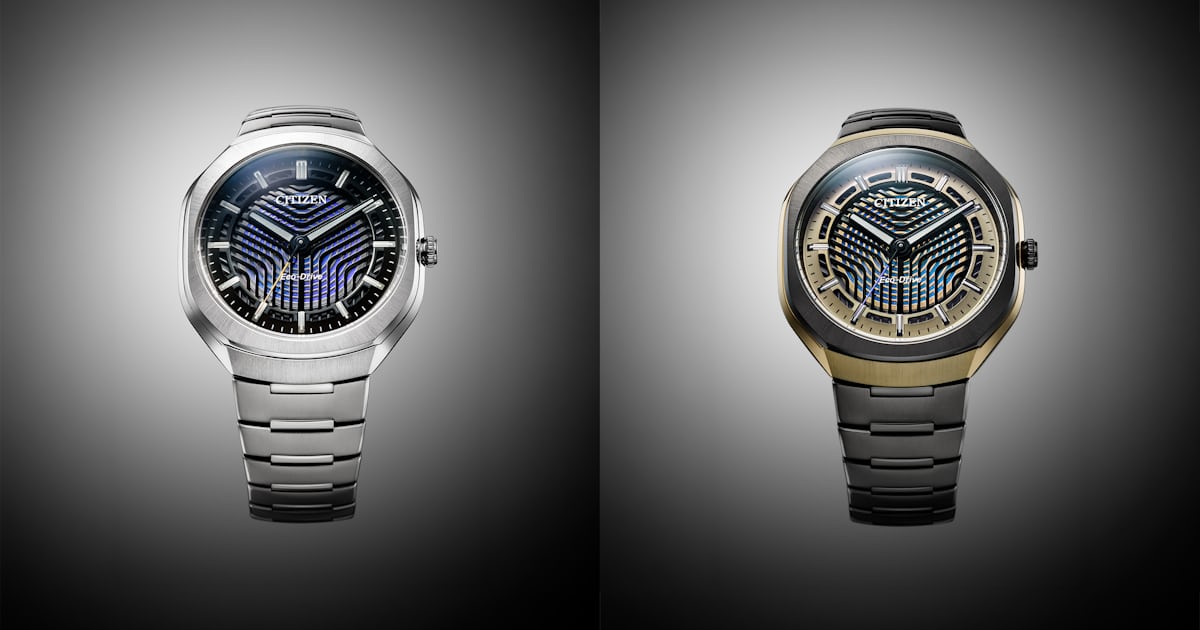
Editor’s pick — Accessory quick take: key highlight (movement/specs for watches, materials/finish, limited run, pricing tier) in 1–2 lines.

A few weeks ago, I found myself at the Jaeger-LeCoultre boutique on Madison Avenue, standing over a tray of enamel Reversos. I was handed one of them and turned it over. On the caseback was a painted scene—several figures rendered in miniature, each no larger than a grain of rice. I was told the eyes, nose, and mouth of the figures on the back had been painted with a single-bristle paintbrush.
A single bristle, the size of a human hair. I was blown away.
A quick Google search revealed that a typical paintbrush has thousands of bristles. This one had only a single strand. A tool reduced to its most minimal, purest form—and yet capable of extraordinary precision. I haven’t been able to stop thinking about it since.

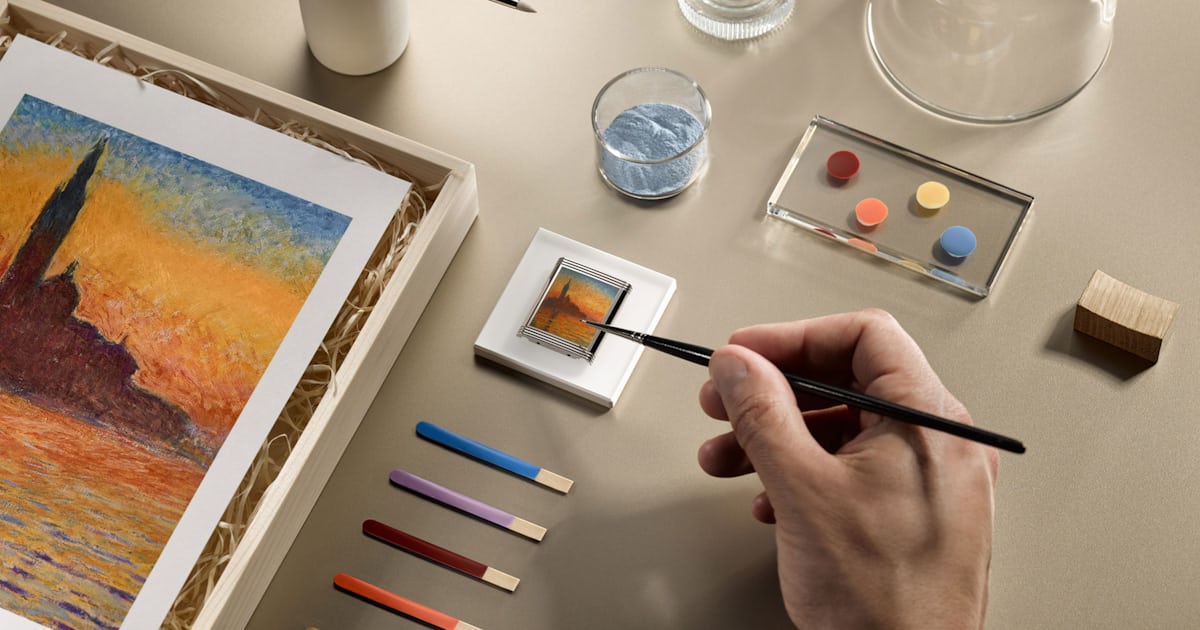
Assembly of Jaeger-LeCoultre Reverso Tribute Enamel Hidden Treasures.
We tend to define innovation as addition. More power. More efficiency. More capability. I love that side of watchmaking. I love the ingenuity behind a new caliber or a cleverly executed additional function. Technology makes our lives easier, smoother, and faster.
But as I kept thinking about that single bristle, I began to wonder whether innovation might also mean subtraction. What if the most radical tool in 2026 isn’t one that does more, but one that does less—intentionally? When “more is more” becomes ubiquitous, does the pendulum eventually swing back to “less is more”?

The Patek Philippe ref. 5077/212G-001 “Macaw on a blue ground,” a 10-piece limited edition Calatrava wristwatch in white gold. The dial is made of 64 cm of gold wire with 38 translucent, opaque, and semi-opaque layers of enamel. Photo by Mark Kauzlarich.
We often say trends are cyclical. Styles come and go. Vintage returns. Minimalism replaces maximalism and then reverses again. Yet craftsmanship doesn’t function on trend cycles. It functions on transmission. If a generation of artisans disappears without passing on what they know, there isn’t a retroactive software update that brings it back. Once it’s gone, it’s gone.

Sally Morrison applying enamel to an anOrdain dial.
Technology has a gravitational pull. It’s omnipresent, addictive. Resisting it—especially in 2026—requires effort and intention, as its magnetism only seems to grow stronger. Even in watches, an industry built on mechanical anachronism, we feel the pressure to keep pace. Brands compete not just on aesthetics but on specs, materials science, and incremental performance gains. Cases get slimmer. Power reserves get longer. Watches get more accurate. The language of advancement is quantitative.
Yet, in the era of technology, watches themselves aren’t about efficiency at all. If you zoom out a bit, they start to feel a lot like that single-bristle paintbrush. Compared to the technology we rely on every day, a mechanical watch is wildly inefficient. It’s delicate, functionally unnecessary, and occasionally unreliable. And yet, like that tiny brush used to paint the enamel figures on a Reverso caseback, it persists because what it represents goes far beyond utility.
And within watchmaking, some crafts push that idea even further. Hand-enameling isn’t quantitative. It’s not scalable. It’s inefficient in the most literal sense. Fewer and fewer people are entering the profession. It can’t be automated. Rather, it depends on the steadiness of the hand working in lockstep with the eye, guided by the accumulated knowledge of someone who has spent years mastering the craft. The entire process depends on transmission—knowledge passed from one generation to the next.

H. Moser & Cie. Endeavour Concept
As technology advances at an accelerating pace, the gains are often incremental. We shave tenths of a millimeter. We increase efficiency by fractions of a percentage. These improvements matter—especially in industrial contexts—but do they speak at all to the wearer’s emotional experience? At a certain point, the difference between excellent and slightly more excellent could be difficult to perceive.
Handwork, on the other hand, is never incremental in that way. It is expressive. It carries the DNA of the person who made it. My question isn’t whether technology will continue to improve. It will. The question is whether, in our pursuit of refinement, we risk undervaluing—and ultimately losing—the human skills and soul that make watchmaking more than an engineering exercise.

Andersen Geneve Rattrapante Mondial
There are reasons for optimism. The rise of independent watchmakers over the last couple of decades suggests a renewed appetite for singular voices and small-scale production. After a week in Geneva surrounded by the biggest brands in the world, one of the most compelling things Ben saw wasn’t a mass-produced marvel but something from a true independent—the Andersen Geneve Rattrapante Mondial.
Back in New York, the Horological Society of New York does a fantastic job of preserving the craft; they just announced the proceeds from its upcoming auction will help support a new generation of watchmakers. And then there are initiatives like the Rolex Watchmaking School in Dallas, which recently opened its doors to a new generation of students—many of whom didn’t grow up immersed in horology. That’s encouraging, suggesting that the pipeline of skilled hands isn’t entirely drying up. Interest can be cultivated. Craft can be taught—if people want to learn, and the demand is there from the consumer side.

The Vacheron Constantin La Musique du Temps Les Cabinotiers ‘The Singing Birds’.
I think about another art form I love: handwriting. Cursive used to be a basic skill taught in schools. Today, it’s often considered unnecessary—and to my knowledge, it’s no longer widely taught. We type. We dictate. We let autocorrect smooth out our rough edges, something I’m certainly not immune to, as I draft nearly everything on a keyboard. It’s efficient. It’s practical. No one would argue that abandoning cursive has brought civilization to the brink. But it is an example of how easily embodied skills can fade when convenience becomes the primary metric. Fifty, one hundred years from now—will cursive even exist? Will handwriting exist? Actually, don’t answer that.
Let’s get back to the single bristle.
What if we reach a point where technological progress plateaus into marginal gains, and we collectively rediscover the appeal of the handmade—only to find that the hands capable of it are gone? What if true craftsmanship becomes desirable again, but only as a concept, not a living practice?
Innovation doesn’t have to be the enemy of craft. The two can—and often do—coexist beautifully in watchmaking. The best modern movements are feats of engineering, and the best finishing remains deeply human.

Assembly of a Jaeger-LeCoultre Reverso Tribute Enamel Hidden Treasures–each one created using grand feu enamel and miniature painting, topped with guillochage on the dial.
But balance isn’t automatic. It requires brands to invest in skills that don’t always maximize margins. It requires consumers to value more than specs. It requires all of us to resist, occasionally, the gravitational pull of “more.”
Standing in that boutique, holding a watch painted with a single-hair paintbrush, I was struck by the emotional response it caused. Equally as exciting for me as seeing new technological breakthroughs, but something quieter—an appreciation for restraint, patience, and mastery.
In a world racing toward the next upgrade, that might be the most radical innovation, and elusive feeling, of all, and I never want it to go away.
Source: www.hodinkee.com — original article published 2026-03-12 17:00:00.
Read the full story on www.hodinkee.com → [source_url]